Tim writes asking how he could charge his 8S2P Prius battery pack used in an experimental EV. My Piaggio is 6S2P and I encountered numerous problems. Here was my response to him:
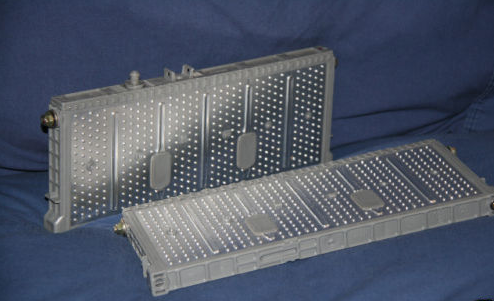
Using Prius packs are tricky and 8S2P is going to be even more difficult. Here are the problems:
- Charging voltage is very high
- Even "smart" chargers cannot detect Prius battery delta-V or delta-T to stop charging
- No parallel charging
- Packs expand on charging
* High voltages
Prius NiMH batteries are internally 6 cells, so a 6S pack is really a 36 cell pack, with nominal voltages of 43.2 volts (but usually hot off the charger at around 50 volts). An 8S pack would be 48 cells, so nominally 57.6 volts with a hot off the charge voltage above 60 volts.
Then the problem is that almost all commercial NiMH chargers go up to 50V (and even those are rare). I had trouble finding chargers for my 36-cell pack. The two I bought were: Astroflight 112D (NiMH version) and the "CH-UN4820 Multi-Current Smart Charger (2.0A) with 3 pins Plug for 36V or 48V NiMH / NiCd Pack."
You will most likely have to split your pack in half so you only charge 4S (24 cells) at a time.
* No parallel charging
First, you know you should never charge in parallel, so you need to add some connectors so you can charge as two 8S1P and 8S1P packs -- or four 4S1P packs. I recommend Anderson 75A power pole connectors.
* Smart chargers can't detect Prius delta-T/V
NiMH batteries are tricky to charge as there isn't a fixed final voltage as with LiIon/LiPo/Lead-acid. Instead, smart chargers usually look for a very small drop in voltage (delta-V) which signals the cell is full; or an increase in cell temperature (delta-T).
Unfortunately, Prius packs don't exhibit a measurable drop in voltage and don't increase in temperature when they are full. This is partly because of their pack design (prismatic rather than cylindrical). Instead, when a Prius pack is full, it bulges due to the increased internal pressure. Not good.
* Packs expand when charged
The prismatic (rectangular) Prius packs will swell and expand when they are overcharged. In order to prevent this, you have to design a strong battery holder that will keep good lateral pressure on them. My own holder (below) uses threaded rod and steel plates to hold the packs together. Even with 2mm steel, the packs have put enough pressure on the side plates to bend them and I'll have to make up new side plates sometime soon.

* How to charge
So how do you charge a Prius pack? I haven't found a smart charger smart enough to charge them using the standard delta-T and delta-V. So instead, I do what the battery management system in the Prius does -- I coulomb count. With my CycleAnalyst, I know how many watt-hours I've used in a ride. For example, for my commute I used 234.23 Wh which is around 5.90 Ah.
Knowing that my multi-current "smart" (stupid) charger has a nominal charge rate of 2.0 amps (and using a wattmeter), I set the charger using a timer to charge for 3 hours. This gives me 3 hours x 2 amps = 6 amp hours.
I have to repeat this twice, one for each side of my parallel chain.
I'm in the process of designing my own charge circuitry that will allow me to automate the coulomb counting. It will measure the output of the battery, then put the same back in (+10% for charging inefficiency). For a backup foolproof end-of-charge detection, I plan on using load cells to detect when the cells are expanding from internal pressure.
Of course, I'm busy with my day-job so this advanced Prius pack charger is still many many months (if not years) away given that a simple charger with a timer does much the same.


Recent Comments